Mariana Castillo Deball
Walking through the town I followed a pattern on the pavement that became the magnified silhouette of a woman’s profile
Exhibition
Walking through the town I followed a pattern on the pavement that became the magnified silhouette of a woman’s profile is “a work that can be experienced as an image, a walking path or a narrative". Commissioned as part of England's Creative Coast: Waterfronts.
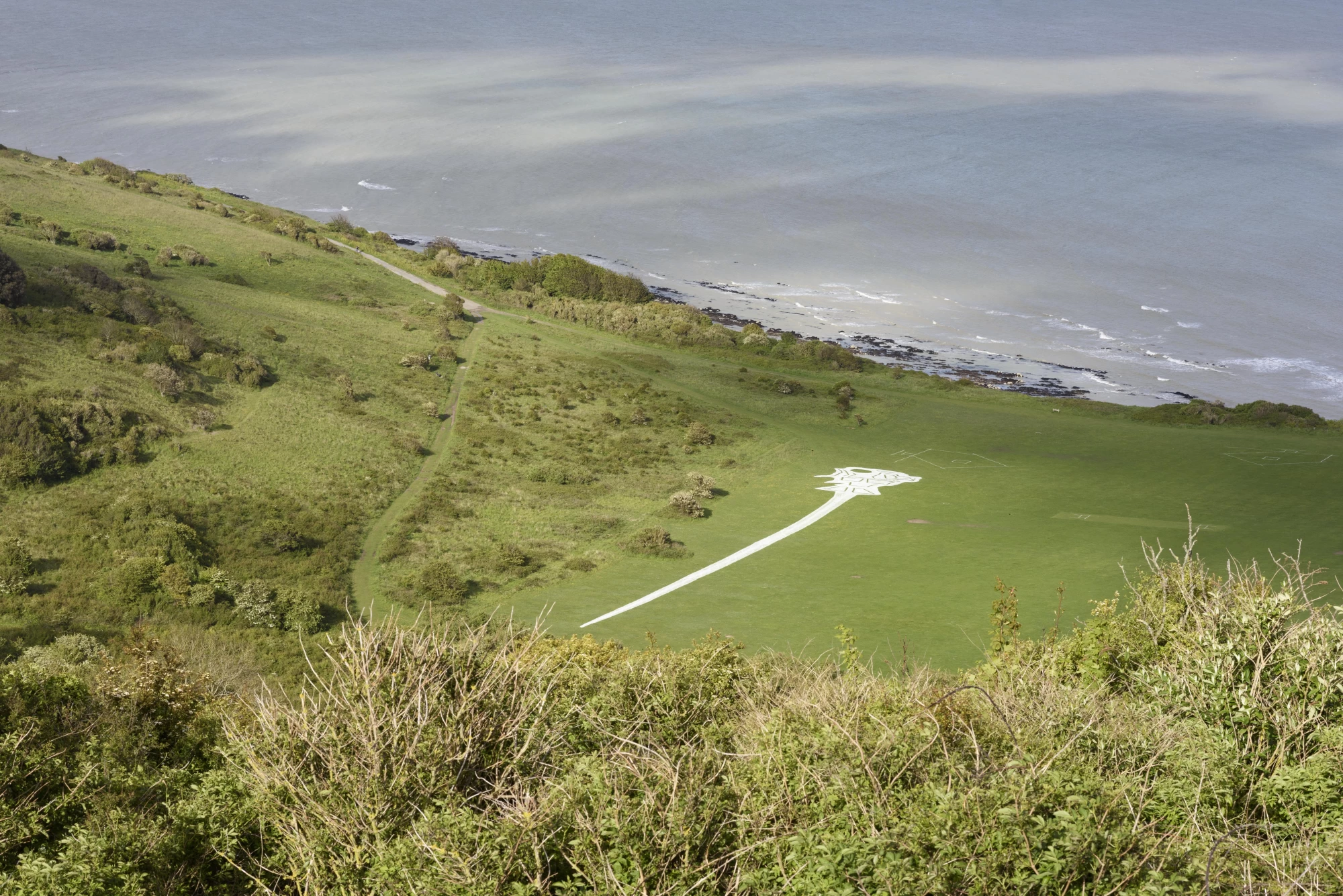
Installation view, Mariana Castillo Deball, Walking through the town I followed a pattern on the pavement that became the magnified silhouette of a woman’s profile. Photo by Rob Harris
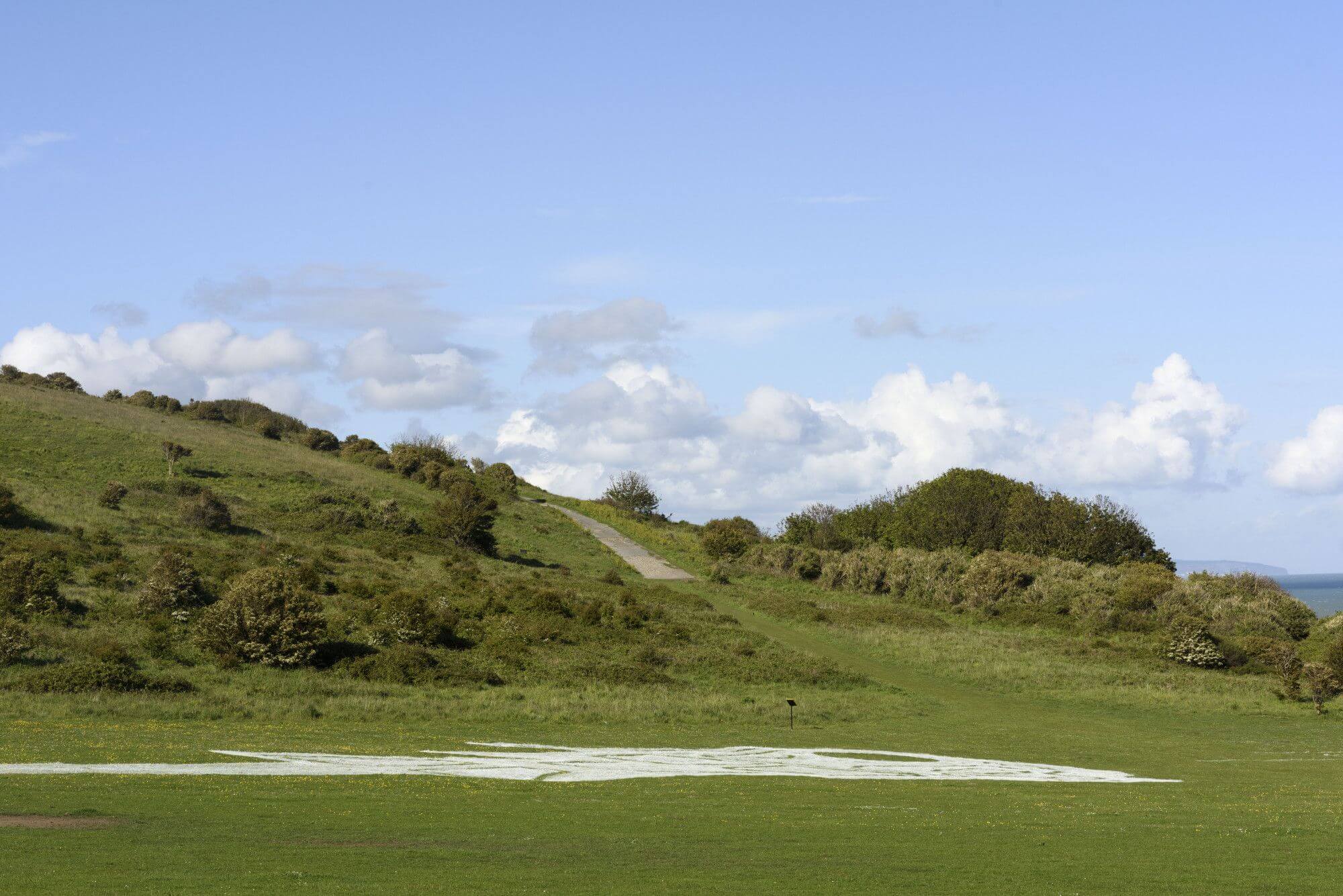
Installation view, Mariana Castillo Deball, Walking through the town I followed a pattern on the pavement that became the magnified silhouette of a woman’s profile. Photo by Rob Harris
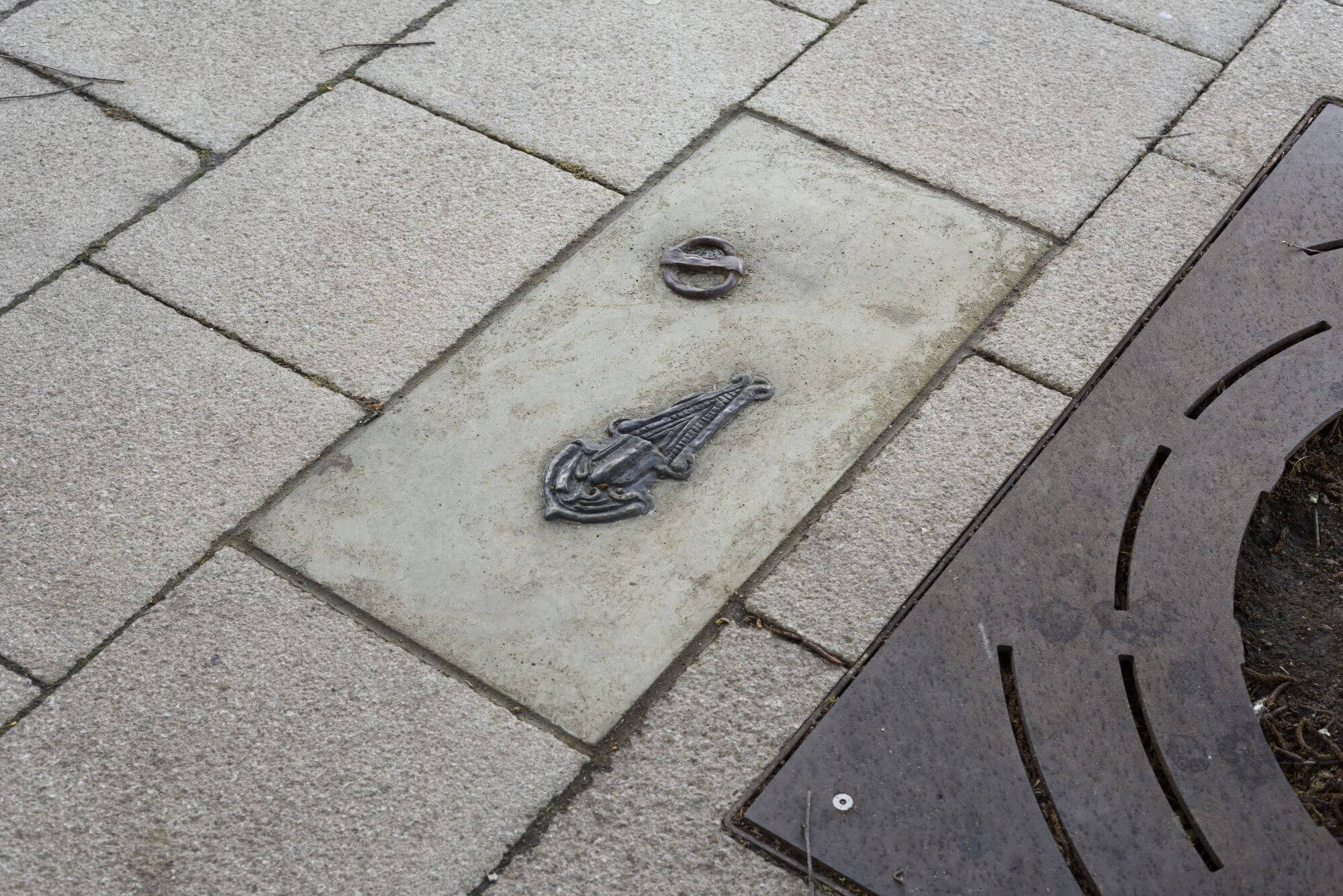
Installation view, Mariana Castillo Deball, Walking through the town I followed a pattern on the pavement that became the magnified silhouette of a woman’s profile. Photo by Rob Harris
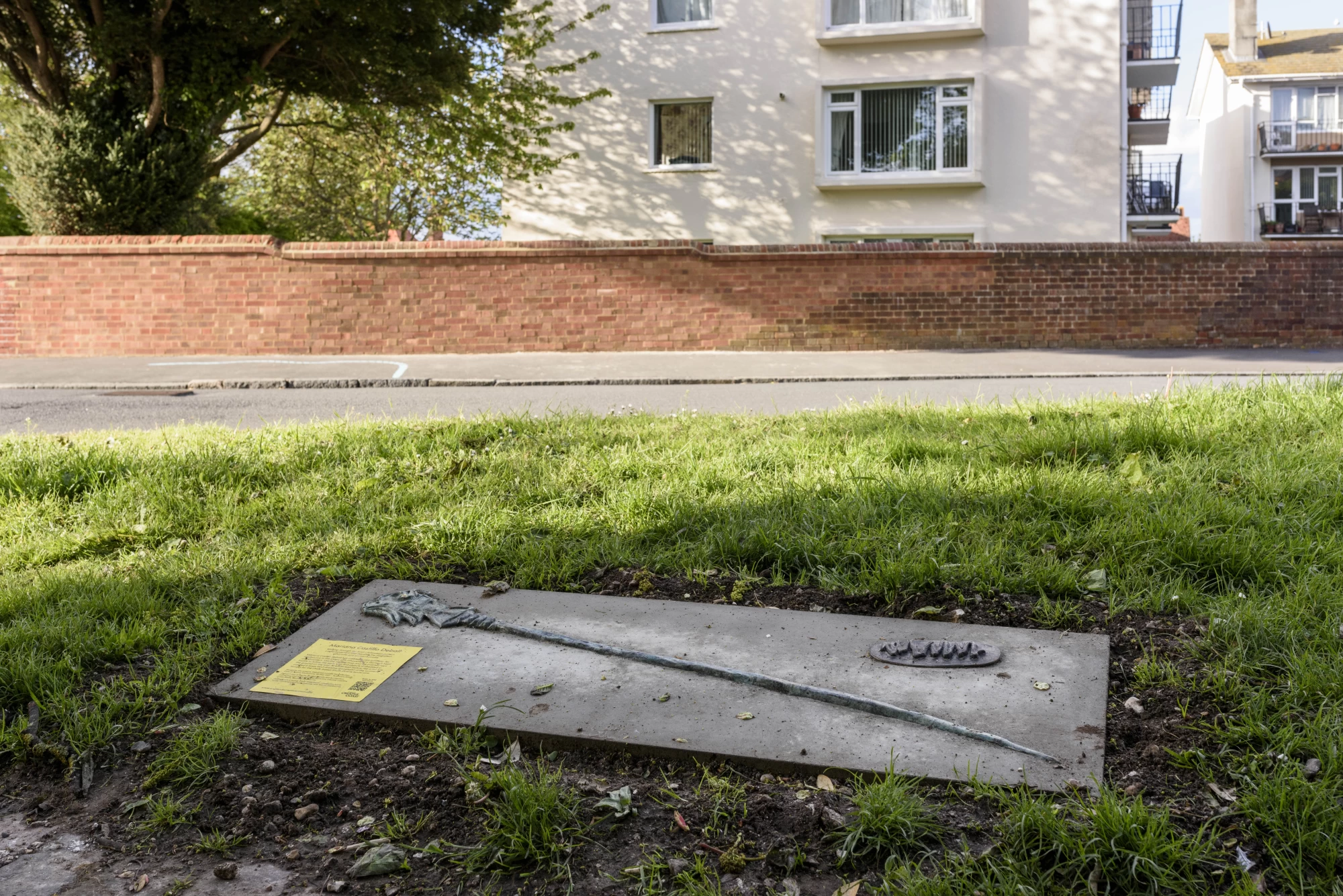
Inspired by local archaeological sites, artist Mariana Castillo Deball created a public artwork to play out across the streets of Eastbourne, into Towner’s gallery building, and out to the South Downs. Walking through the town I followed a pattern on the pavement that became the magnified silhouette of a woman’s profile is, explains Castillo Deball, “a work that can be experienced as an image, a walking path or a narrative.”
Castillo Deball has marked a two-hour walking route around the streets of Eastbourne with chalk-stenciled rope designs that outline the silhouette of a woman’s profile. Throughout the route, several sculptural objects are embedded in the pavement, each relating to objects that were buried with The Frankish Woman, whose ancient remains were discovered in Eastbourne at the Anglo-Saxon cemetery on St Anne’s Hill. The locations for the objects are shown on the map as a loop in the rope.
A third element to the work takes place at Whitbread Hollow on the South Downs where the shape of a giant hairpin, the most magnificent of the funerary objects, is inscribed in chalk. In contrast to the nearby Celtic hill figure, The Long Man of Wilmington which is cut into the chalk a few miles north-east of Eastbourne, Castillo Deball’s geoglyph will be evanescent, disappearing over time.
Alongside her Waterfronts commission, Castillo Deball has curated an exhibition of Towner Collection works; A drawing, a story and a poem go for a walk.
This commission is part of England’s Creative Coast’s Waterfronts project curated by Tamsin Dillon.
About Mariana Castillo Deball
Mariana Castillo Deball was born in 1975, Mexico City, and lives and works in Berlin. Deball works in installation, sculpture, photography and drawing, exploring the ideologically constructed conditions under which artifacts appear in today’s culture. She takes on a kaleidoscopic approach to her work, culling information from various disciplines such as archaeology and science, and through research and collaboration, creating works that arise from the collision and recombination of these different languages.
Solo exhibitions of her work have been held at MGKSiegen, Germany (2021), Modern Art Oxford, UK (2020), the Reva and David Logan Center for the Arts, University of Chicago, USA (2018), Museo Amparo, Puebla, Mexico (2018), SCAD Museum of Art, Savannah Georgia, USA (2018), Galerie Wedding, Berlin, Germany (2017), San Francisco Art Institute, San Francisco, USA (2016), Museo de Arte Contemporáneo de Oaxaca, Mexico (2015), Hamburger Bahnhof, Berlin, Germany (2014); CCA, Glasgow, UK (2013); Chisenhale Gallery, London, UK (2013); Museo Experimental El Eco, Mexico City, Mexico (2011); and Museum of Latin American Art, Long Beach, USA (2010). Group exhibitions include the 8th Berlin Biennale, Berlin, Germany (2014); Documenta 13, Kassel, Germany (2013); and 54th Venice Biennale, Venice, Germany (2011).
About England's Creative Coast: Waterfronts
Between May and November 2021, England's Creative Coast launched seven new artworks by international contemporary artists along the coastline of Essex, Kent and East Sussex.
Waterfronts was a new series of artworks, curated by Tamsin Dillon and set in the landscape of Margate, Folkestone, Hastings, Bexhill-on-Sea, Eastbourne, Gravesend and Southend-on-Sea. The artworks take the border between land and water as their inspiration. Each artist responded to the uniqueness of the coastal locations, focusing on issues, stories and questions – social, natural, geological, political - to offer fresh perspectives on each place, for you to contemplate.
Find out more on the England's Creative Coast website.
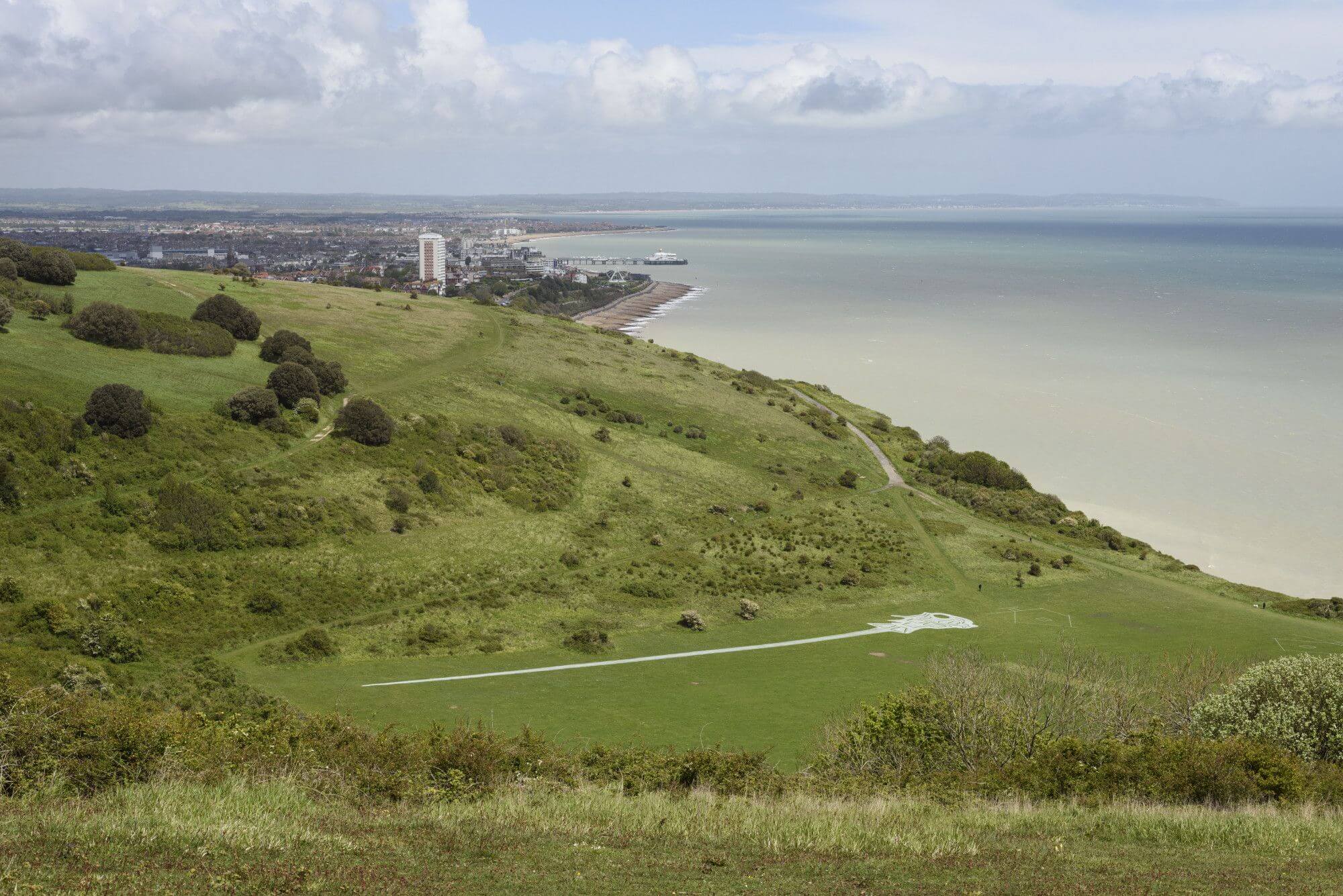
Installation view, Mariana Castillo Deball, Walking through the town I followed a pattern on the pavement that became the magnified silhouette of a woman’s profile. Photo by Rob Harris
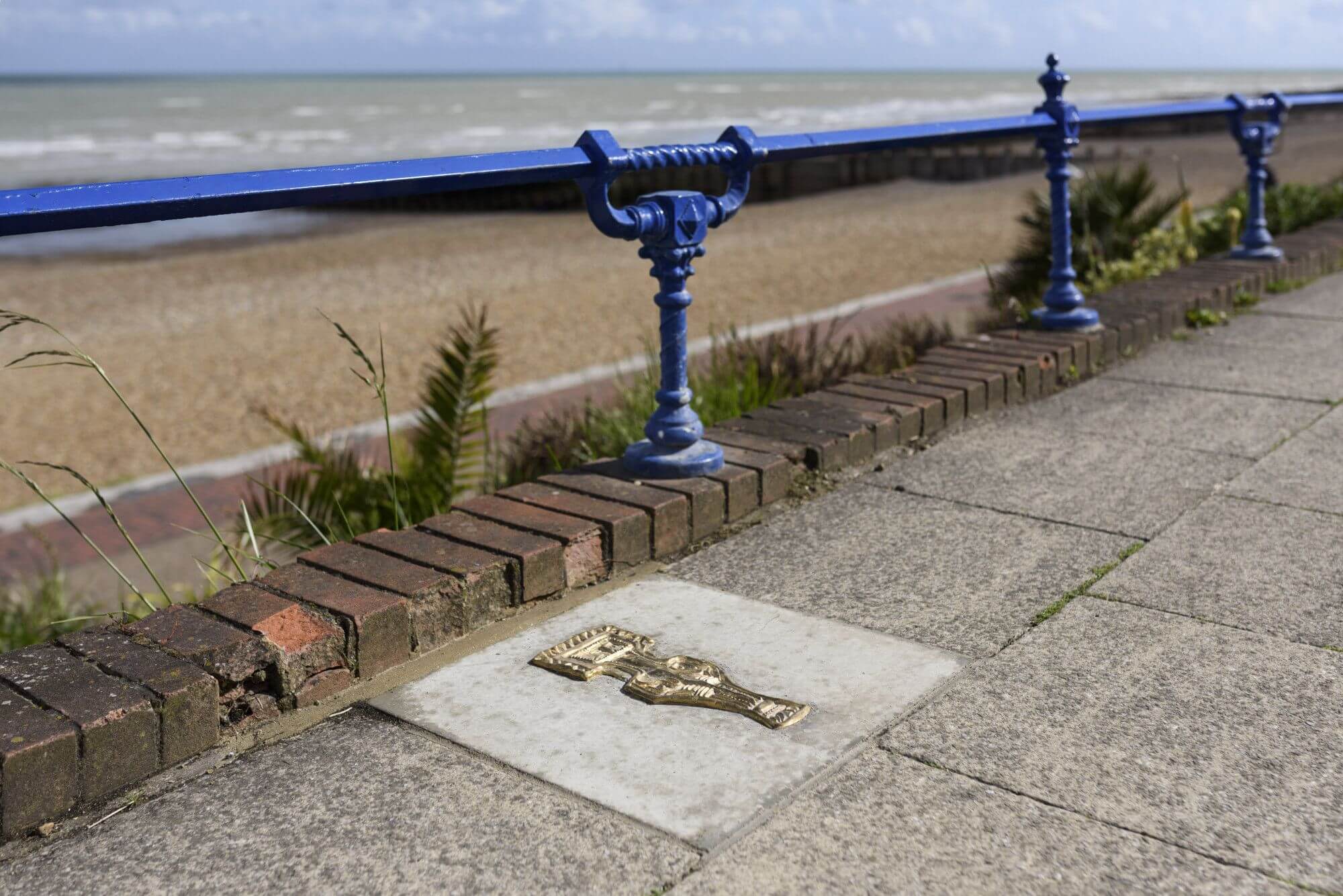
Installation view, Mariana Castillo Deball, Walking through the town I followed a pattern on the pavement that became the magnified silhouette of a woman’s profile. Photo by Rob Harris