Saturday Breakfast Film Club: The Seashell and the Clergyman
Cinema
Germaine Dulac, 1929 41m
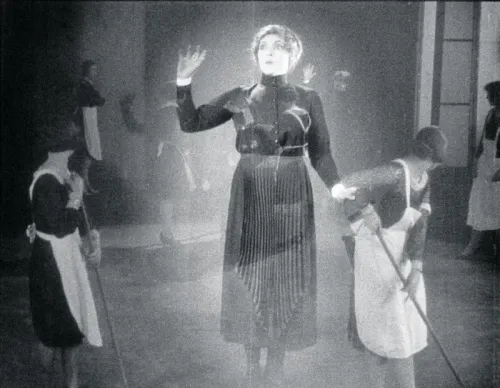
Directed by Germaine Dulac, The Seashell and the Clergyman is considered one of the earliest examples of surrealist cinema.
Saturday Breakfast Film Club: The Seashell and the Clergyman
Directed by Germaine Dulac, The Seashell and the Clergyman is considered one of the earliest examples of surrealist cinema.

This new, curated programme of cult and alternative art films, specially selected to provide extra context to Towner's exhibitions, will begin on 14 June. Each screening is accompanied by a short introduction. The first films in the series link to exhibitions Paule Vézelay: Living Lines and Sussex Modernism.
14 June: The Seashell and the Clergyman
12 July: Borderline
13 September: Daisies
Henry Jordan works at Towner as a Duty Manager and helps with the day-to-day operations of the Towner cinema. He studied English and Film Studies at University of Exeter, which included a study abroad year that he took at University of South Florida in Tampa, USA. During Henry’s time at university, he discovered his core fields of interest, among them para-cinema, surrealism and anti-literature.
Before Towner, Henry worked at the Arts Picturehouse in Cambridge, where he was a regular host for their sell out quiz nights and hosted a Q&A with Dame Pippa Harris for her film Empire of Light. He also was a regular on the Cambridge Film Show, has been published in The Quietus and still writes for The Quite Nerdy Blog, his blog about pop culture that has been running since 2014.
Directed by Germaine Dulac, The Seashell and the Clergyman is considered one of the earliest examples of surrealist cinema. Dulac’s films eschew convention in favour of dreamlike logic. Though a story is present, in the form of a tormented clergyman pursuing a woman who is involved with a military officer, Dulac herself encourages her audience to disengage from narrative. In 1928, she proclaimed “The future belongs to the film that cannot be told” and all her films speak completely to this sentiment.
This screening of The Seashell and the Clergyman will be accompanied by a soundtrack written by Klive & Nigel Humberstone (In The Nursery).
In The Nursery’s score sonically reinterprets the inherent symbolism of the film, utilising sound design and experimental recording approaches - the latter including the placement of sensitive omnidirectional electret microphones inside a pair of seashells.
The film will also be accompanied by three of Dulac's short abstract films Themes and Variations (1928), Cinegraphic Study on an Arabesque (1929) and Disque 957 (1929). Almost one hundred years on, Dulac’s films are still exciting and crucial texts for abstraction, surrealism and the possibilities for the future of cinema as an art form.
This screening is part of the public programme for Paule Vézelay: Living Lines, and will be introduced by film writer Henry Jordan.